
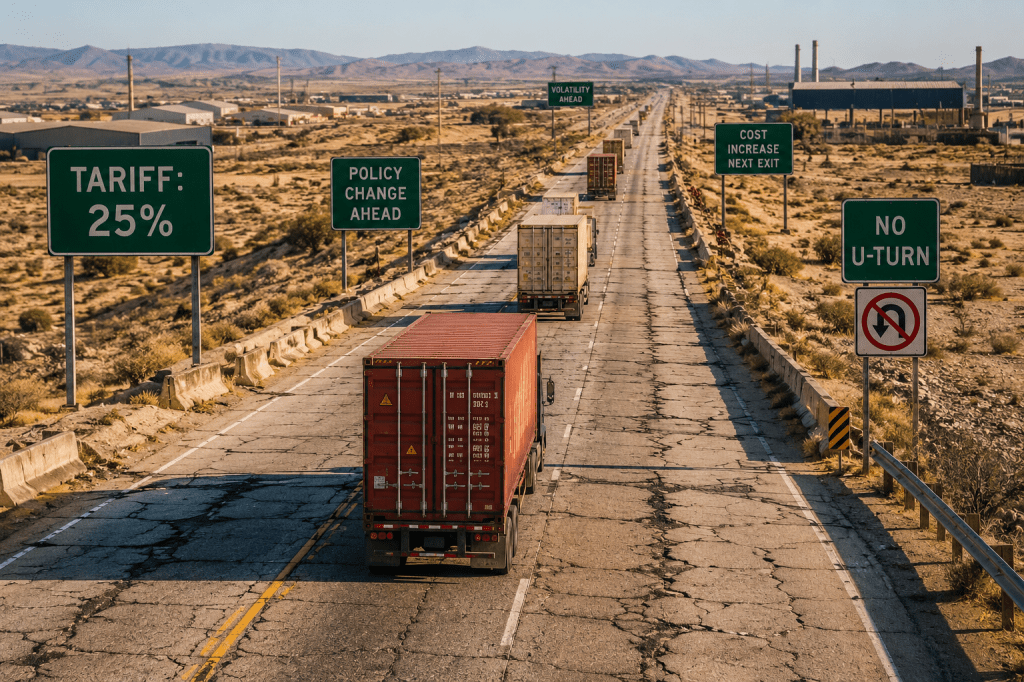
Or: How I Learned to Stop Worrying and Love the Landed Cost Recalculation
Pull up a chair.
Because if I hear one more supply chain leader say “once the tariff situation stabilizes…” I am going to need something stronger than cafeteria coffee.
Here’s the thing nobody wants to say out loud in the all-hands meeting:
There is no “stabilizes.”
Tariffs are not a storm you wait out. They are not a bump in the road. They are not a “temporary measure” a phrase that, in trade policy, has roughly the same shelf life as “this meeting could’ve been an email.”
Tariffs are the road now. Potholes and all.
And yet, every week I talk to teams still running their supply chain strategy on the assumption that things will go back to normal. Normal retired. Normal packed its desk, took its parking spot, and moved somewhere with lower geopolitical risk.
I know this because I lived every single stage of it. Let me save you some scar tissue.
Stage 1: Denial (“We’ll Wait It Out”)
I’ve lived this one firsthand.
In a prior role, tariffs hit a core category overnight. The initial reaction from leadership? “Let’s not overreact. This might reverse.”
So we waited.
Procurement kept expediting containers at inflated costs. Finance started quietly flagging margin erosion. Sales kept quoting old pricing because “we’ll adjust later.” The posture was: don’t move, it might all go away.
Six months later, we were still single-sourced. Our competitor had already dual-sourced across Southeast Asia. And we were in a leadership meeting explaining why margin had dropped 300 basis points “unexpectedly.” PYMNTS
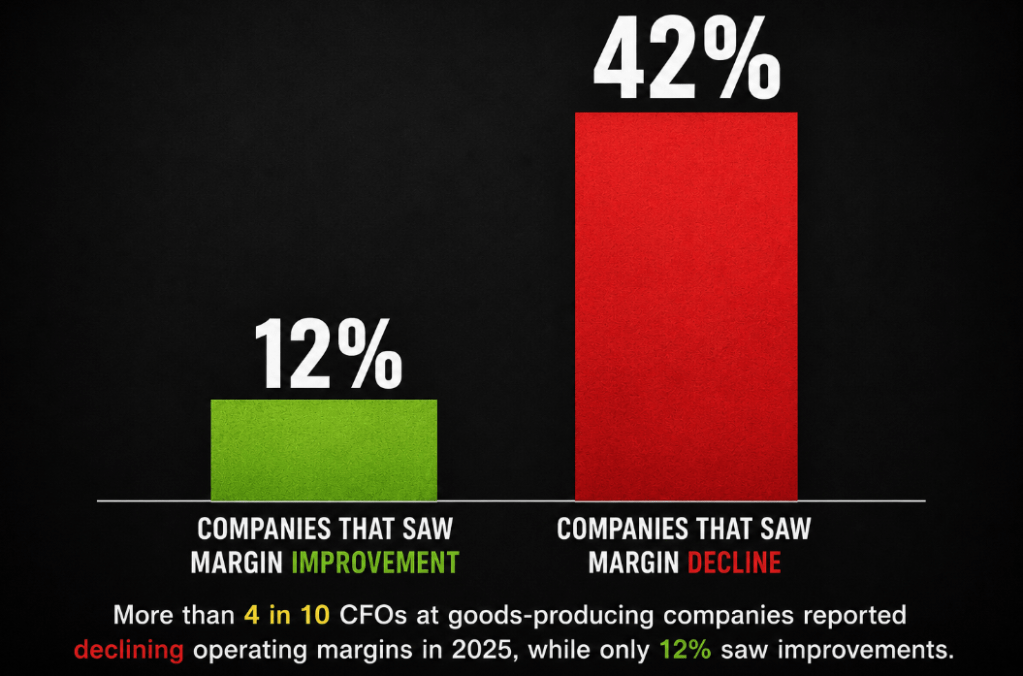
Nothing about it was unexpected. We just chose not to act.
The cost of waiting wasn’t just financial, it was optionality. Suppliers who moved fast locked in alternative capacity. Competitors who diversified early had choices. We had a single-source in a tariff-exposed country and a very nervous account manager.
Waiting is a strategy. A bad one. But a strategy.
Stage 2: Panic Nearshoring (“We’re Moving Everything to Mexico!”)
I’ve also been the guy building the Mexico strategy. So, I can mock it with full moral authority.
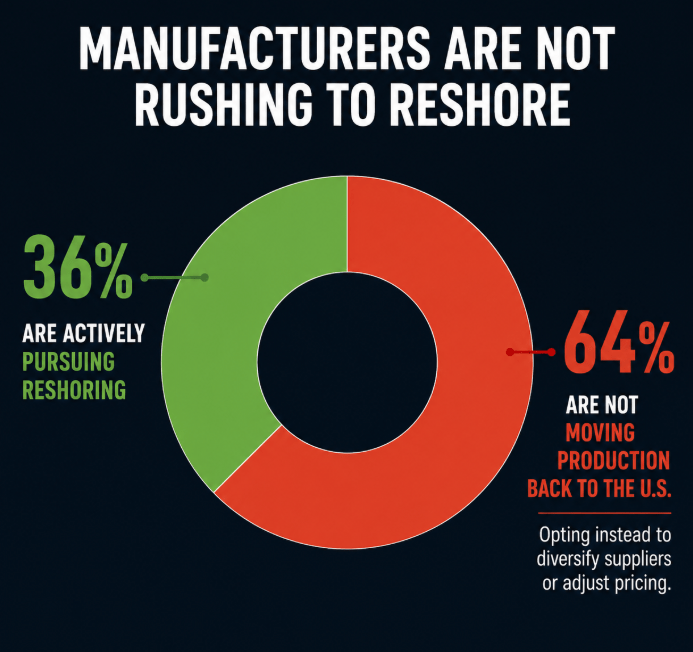
We launched a greenfield operation: 100+ injection molding machines, local sourcing, the whole play. On paper, it was the perfect tariff hedge. Leadership was excited. The Logistics Director came back from the site visit with a tan and a PowerPoint. There were a lot of phrases like “strategic pivot” and “de-risking our footprint.”
And to be fair — transit times improved. Flexibility improved.
But here’s what nobody modeled properly upfront:
- Tooling transfer costs came in higher than projected
- MOQ shifts increased working capital requirements
- Engineering changes still took the same amount of time because location does not fix process
We didn’t fail. But we learned the hard way that changing geography without changing the operating model just relocates inefficiency. The zip code changed. The problems caught the next flight over.
(If this is sounding familiar, the bottleneck post from a few months ago covers exactly this phenomenon, consider it required reading alongside your current suffering.)
The root cause of supply chain dysfunction is almost never distance. It’s misaligned incentives, unclear ownership, and processes that run on heroics instead of systems. Nearshoring doesn’t fix any of that. It just makes it show up faster.
Stage 3: Passing It On (“The Customer Will Absorb It”)
I’ve sat in those pricing meetings too.
We had a category where tariffs, freight, and inflation stacked up fast. The margin math was ugly. The initial instinct from leadership: “Let’s pass it through. Everyone is dealing with the same thing.”
Except…they weren’t.
One competitor had already re-sourced earlier, locked in cost advantages, and rebuilt their pricing model before the crisis hit. So when we raised prices, the customer did not absorb it.
They switched. KPMG
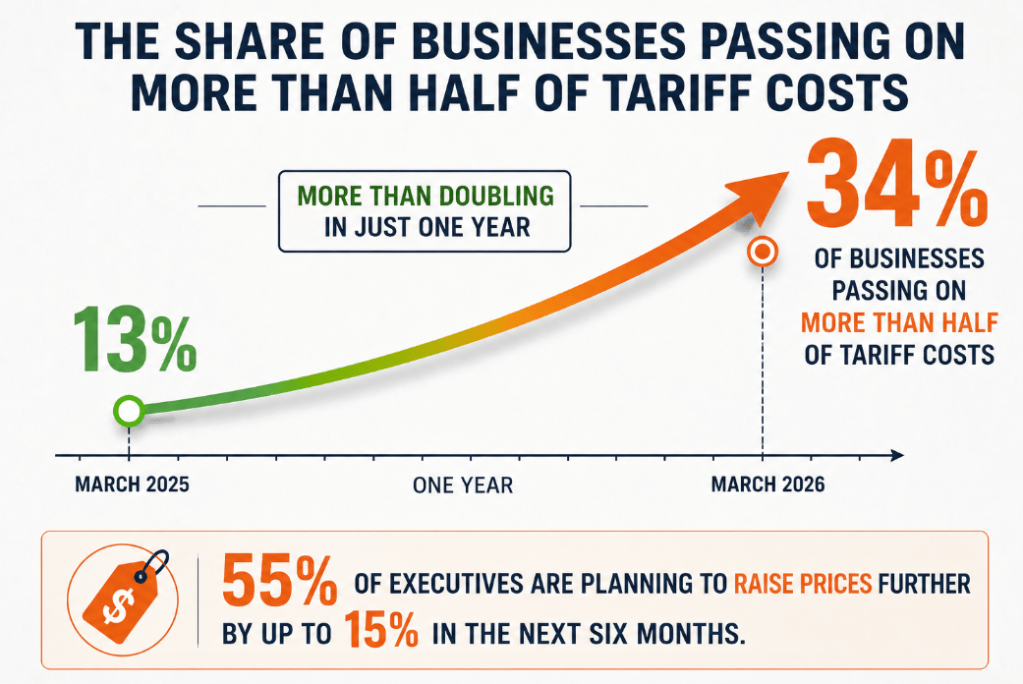
That’s the moment you realize “pass-through” is only a strategy if you’re not the most expensive option. Pricing power is not something you discover in a tariff crisis — it’s something you either built before the crisis or you didn’t.
The companies that treated tariffs as a temporary line item to pass on are now having very uncomfortable conversations about why their prices are 15-18% above competitors who “somehow figured it out.”
They figured it out by treating tariffs as a permanent cost structure, not a rounding error on this quarter’s P&L.
Stage 4: The Spreadsheet That Explains Everything (And Changes Nothing)
I have built this spreadsheet. I am not proud and I am not ashamed.
Power BI dashboards. Multi-ERP integrations. Scenario models with tabs labeled “Base,” “Moderate,” and “Catastrophic.” A tab called “Assumptions” that nobody fully trusted. A tab called Final_v7_ACTUAL_USE_THIS_ONE.
We had visibility down to SKU-level landed cost, supplier-level exposure, and scenario-based margin projections. It was genuinely beautiful.
Here is the uncomfortable part: the data was right. The decisions were still slow.
Because:
- Leadership didn’t want to commit to a sourcing shift
- Sales didn’t want to reset customer pricing
- Ops didn’t want to disrupt current flow
The spreadsheet didn’t fail. The organization’s willingness to act did.
And that is the real lesson: a tariff model is not a tariff strategy. A spreadsheet tells you where the fire is. Strategy is what you do before, and after, you see the smoke.
The Uncomfortable Truth
In one turnaround situation I was part of, tariffs weren’t actually the root problem.
They were just the X-ray that finally showed everyone what was already broken:
- An over-concentrated supplier base that nobody had addressed because it “worked fine”
- No escalation clauses in contracts, because that conversation felt awkward in good times
- A weak connection between S&OP and real-time cost inputs, so planning and finance were basically working from different maps
We didn’t fix the tariffs. You can’t. What we fixed was supplier diversification, contract structure, and decision-making speed. And the margin came back.
Tariffs didn’t create those problems. They just turned the lights on. And a lot of teams are discovering that their house looked a lot messier in the light than they thought.
What Actually Helps (Now With Real Scars)
Here is what I have seen work not in theory, but in practice, with the dents to prove it.
1. Build tariffs into landed cost permanently. We stopped treating tariffs as a “line item adjustment” and baked them into every sourcing decision, every pricing discussion, every make-vs-buy analysis. That shift alone changed how teams thought about cost. When tariffs are a variable, people treat them as temporary. When they’re structural, people plan around them.
2. Map your Tier 2 and Tier 3 exposure not just Tier 1. We had a “Mexico supplier” that was sourcing key components from China. The tariff exposure came through anyway…. just hidden one layer down. Your Tier 1 invoice does not tell you the whole story. If you haven’t mapped your sub-tier exposure, you don’t actually know your tariff risk. You know your Tier 1 supplier’s version of your tariff risk.
3. Put escalation clauses in every contract. We renegotiated contracts to include cost triggers tied to input changes: tariffs, freight, raw material indices. It was not a fun conversation. Vendors pushed back. Customers pushed back. But when the next wave hit, those clauses saved us from having to choose between eating the cost and losing the business. If your contracts have no escalation language, go fix that today. I will wait.
4. Build supplier optionality before you’re desperate. The best move we made wasn’t switching suppliers, it was qualifying backup suppliers before we needed them. When disruption hit, we weren’t negotiating from a position of panic. We had options. Qualifying a backup supplier during a crisis is like buying flood insurance during the flood. You can do it. It’s just much more expensive, and nobody’s happy about it.
5. Connect S&OP to real landed cost. Once we tied demand planning to actual cost inputs, not standard cost, not last year’s actuals. The decision quality improved immediately. Before that, we were planning volumes and pricing based on cost assumptions that were 6-12 months stale. If your S&OP process is not getting a real-time cost feed, you are flying instruments that are reading last year’s weather.
My Take
The biggest difference I’ve seen between companies that struggled and companies that adapted wasn’t intelligence, resources, or even supply chain sophistication.
It was speed of acceptance.
The winners didn’t argue with reality. They said: costs are unstable, trade policy will change again, and our model needs to flex with it. Then they built systems around that assumption before the next wave, not after.
The others kept waiting for normal to come back.
It’s not coming back.
I’ve made most of these mistakes personally. Some of them more than once. The difference now? I don’t wait for stability anymore. I assume change and build for it.
Stay sharp. Stay caffeinated. And if your landed cost model still has 2019 assumptions in it — you have homework to do.
 ManufAi
Leave a comment